
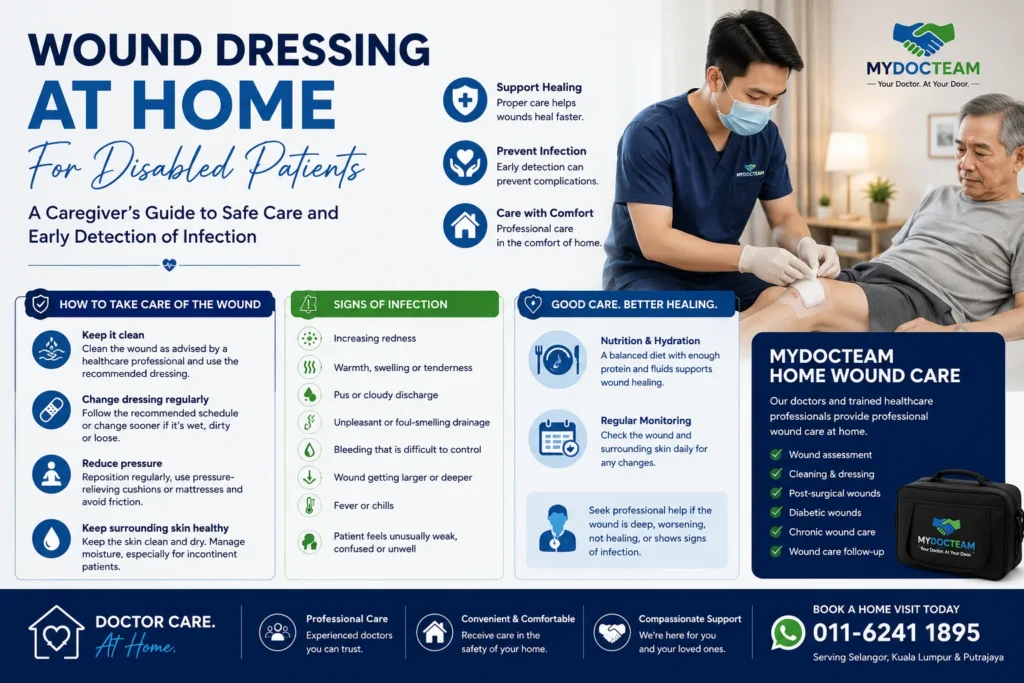
Caring for a disabled or mobility-limited patient at home can be challenging, especially when they have a wound that requires regular dressing and monitoring. For patients who spend long periods in bed or a wheelchair, wounds can take longer to heal and there is a higher risk of pressure injuries and infection.
With the right wound care and regular monitoring, caregivers can help protect the wound and support the healing process.
1. Keep the wound clean and properly covered
Wounds should be cleaned according to the treatment plan provided by a healthcare professional. Use the recommended wound-cleaning solution and dressing, and avoid applying products such as hydrogen peroxide, iodine or other antiseptics unless specifically advised by a healthcare professional, as some products can damage healing tissue.
Always wash your hands before and after handling the wound. Keep the dressing clean and dry, and change it according to the recommended schedule or sooner if it becomes wet, dirty or loose.
2. Reduce pressure on the wound
For patients who have limited mobility, pressure is one of the biggest concerns.
Pressure injuries commonly develop around areas such as the heels, ankles, hips, tailbone, elbows and shoulders. Regular repositioning helps reduce prolonged pressure on the same area.
Caregivers should:
Reposition patients regularly according to their individual care plan.
Avoid dragging the patient across the bed, which can cause friction and skin damage.
Keep bedsheets and clothing smooth and free from wrinkles.
Use appropriate pressure-relieving cushions, mattresses or supports where recommended.
Check areas of skin that are difficult for the patient to see.
For wheelchair users, regular weight shifting is also important.
3. Keep the surrounding skin healthy
The skin around a wound should be kept clean and dry. This is particularly important for patients who experience urinary or bowel incontinence, as prolonged exposure to moisture can contribute to skin breakdown.
Check the skin every day for new redness, swelling, blisters, broken skin or areas that feel unusually warm, hard or soft. Early changes can sometimes appear before a more serious pressure injury develops.
4. Watch for signs of infection
One of the most important responsibilities of a caregiver is recognising when a wound may be becoming infected.
Look out for:
Increasing redness around the wound
Increasing warmth or swelling
Increasing pain or tenderness
Pus or cloudy discharge
Unpleasant or foul-smelling drainage
Bleeding that is difficult to control
The wound becoming larger or deeper
Fever or chills
The patient becoming unusually weak, confused or unwell
These symptoms should not be ignored. Increasing redness, warmth, swelling, pus, worsening pain or fever require prompt medical assessment.
5. Pay attention to the patient’s overall health
Wound healing is not only about the dressing. Adequate nutrition, hydration and appropriate management of conditions such as diabetes can also affect healing. A balanced diet with sufficient calories and protein is important for maintaining healthy skin and supporting wound healing.
When should you seek professional help?
Not every wound should be managed by a caregiver alone.
A healthcare professional should assess wounds that are deep, worsening, not healing, producing significant discharge, developing signs of infection, or occurring in patients with significant mobility problems or underlying medical conditions.
For patients who are unable to travel easily, having a healthcare professional assess the wound at home can be a more comfortable and practical option.
MyDocTeam Home Wound Care
At MyDocTeam, our doctors and trained healthcare professionals provide professional wound care in the comfort and privacy of your home.
We can assist with wound assessment, cleaning and dressing, post-surgical wounds, diabetic wounds, chronic wounds and wound-care follow-up.
Doctor Care. At Home.
📍 Serving Selangor, Kuala Lumpur & Putrajaya
📲 Book Us / WhatsApp Us Now: 011-6241 1895
This article is intended for general health information and does not replace an assessment by a qualified healthcare professional. Wound treatment should be individualised according to the type, depth, location and cause of the wound.